Crash
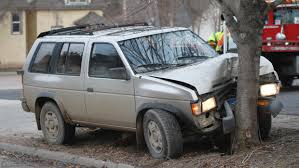
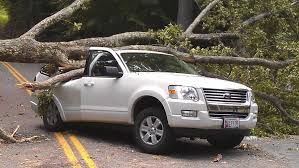
A crash describes a traffic incident in which people are injured or property sustained damage due to an accident or crash. It may also describe an incident where control of a vehicle was lost, but no injury or damage was sustained (e.g. skidding onto grass at the side of the road). In the context of a traffic incident, using the term "accident" does not imply the event was unavoidable. So the terms Accident and Crash may be used synonymously (e.g. the Crash Date is used for "the date when a driver drove his car into a tree (a crash)" and would also be used for "the date when a tree fell on a parked car (an accident)").
History Note, on the terms Accident and Crash: As early as 1914, members of the National Safety Council's Public Safety Section were developing standard Accident Data Forms for state and city use. AAMVA started to formally use ‘accident’ in its element definitions in 1979 when the 1st edition of D20 was defined by the AAMVA membership. In 1997 NHTSA proposed replacing the term Accident with Crash, because the term Accident implied no one was responsible for the incident. In 2019 AAMVA switched to using the term 'crash'. The computer applications used by AAMVA's membership still label traffic incident data elements as Accident data. So while AAMVA's policy is to: use Crash in place of Accident, at the software implementation level, the term 'accident' may still be encountered.
Emergency responders and insurance carriers are the entities who capture these details and they use many of the same elements when recording information about a traffic incident, be it an accident or a crash. Emergency responders file information about the traffic incident, in the jurisdictions where the incident occurred.
Crash information is recorded for each driver involved in the incident and linked to the driver via their driver license record.
The elements included under Crash in D20, are the elements shared in a Driver's History. There are definitions for a number of additional Crash data elements defined in other standards such as D16 and MMUCC.
|
AAMVA.org Who is AAMVA Contact AAMVA (helpdesk@aamva.org) System Availability |
AAMVA Terms of Service AAMVA - Official Use Only 2/18/2026 © AAMVA. All rights reserved. Book: 56261 Topic: 19890 |