
This award is presented to jurisdictions for improving customer-facing processes through offering or enhancing things such as online transactions, mobile units, access to vital records, improved payment options, greeter/triage stations, the ability to speed up service if the wait time is long, or other conveniences.
This is an agency award and is awarded one per each region and among those, an international winner is selected.
Each agency may submit only ONE entry.
Criteria for selection:
- Project/program results in improved customer convenience
- Customers benefited from project/program
- Measurable outcomes
- Customer testimonials endorse service
2026 Winners
International and Region 2
Alabama Law Enforcement Agency
ALEA Cuts Wait Times with Smart Scheduling and Queuing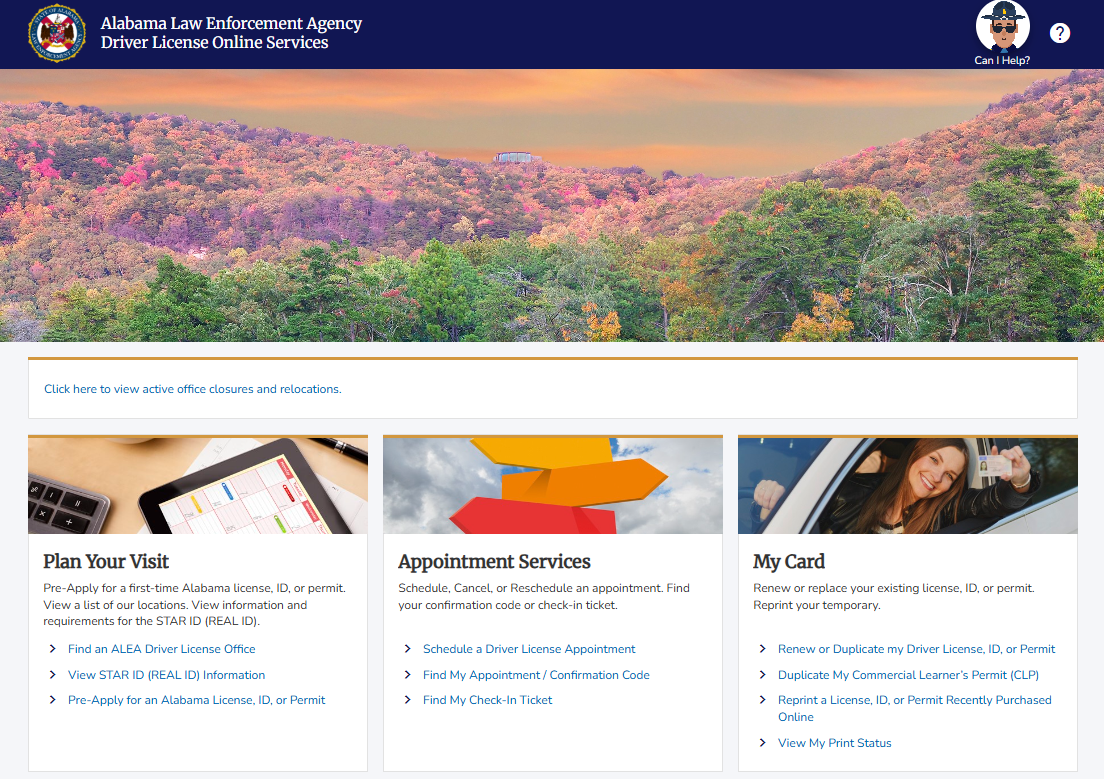
Customers want services that fit into their lives, not the other way around. Recognizing this, in February 2025, the Alabama Law Enforcement Agency (ALEA) launched a mobile-based platform that transformed how customers access driver licensing services. The new platform—implemented in just six months—integrates scheduling, queuing, and lobby management into a seamless experience.
The initiative was driven by ALEA’s commitment to delivering a streamlined, stress-free customer experience, particularly as the REAL ID deadline approached, bringing potentially high volumes of visitors. Under the previous system, technical limitations made it difficult for ALEA to offer the flexibility and accessibility customers expected, such as broader appointment availability and text notifications. Now, using the same vendor as ALEA’s core system ensures a harmonious, modern experience, making it easier to update and adjust as needs evolve.
ALEA has since expanded appointment availability to four additional locations, with more planned. The new platform also verifies applicant eligibility, ensuring customers can schedule the correct services without confusion.
Customer-centric outcomes include:
- Quick, simple online scheduling: Customers can schedule appointments in just 2–3 minutes through ALEA’s portal, a tool they are already familiar with. Scheduling is available via a desktop computer, phone, or tablet, without downloading apps or creating accounts. More than 60% of visitors now arrive with an appointment, double the previous amount, reducing lobby congestion and creating a smoother experience.
- Automated SMS reminders and rescheduling: Customers receive appointment confirmations and reminders, giving users the flexibility to adjust plans as needed. No-shows have dropped from 18% to 1.5%.
- Shorter, predictable wait times: Once checked in, customers receive real-time texts about their wait status, allowing them to wait outside or in a coffee shop down the road. Appointment holders are now seen within five minutes, about one-third of the previous wait time. The average wait time for walk-in guests has decreased by 75%, as staggered appointments reduce lobby congestion and give staff more control over guest flow.
- Accessibility improvements: Lobby display screens improve accessibility by providing clear, visual queue updates that help not only customers who are hard of hearing but also those with cognitive, visual, or language barriers, mobility limitations, and others.
Before this initiative, in the case of emergency events, staff had to call and email each customer individually to reschedule appointments or notify them of office closures and urgent updates. This was a time-consuming process that slowed service and risked disruptions for customers. The new text-based system streamlines this process; with just three clicks, staff can send mass notifications to all customers, and the system automatically handles rescheduling.
These intuitive, time-saving features free up staff to focus on customer service, while customers benefit from fast, seamless communication that ensures continuity and convenience.
Region 1
Delaware Division of Motor Vehicles
Licensed Transporter (LT) Tag Program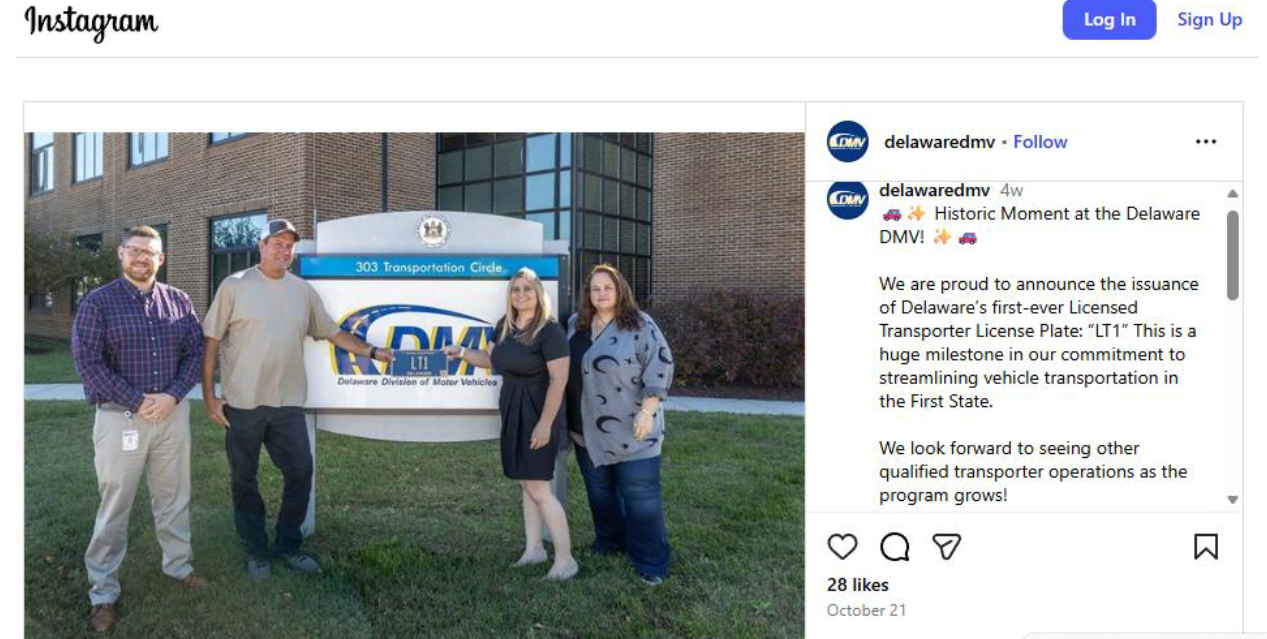
The Delaware Division of Motor Vehicles (DMV) launched the Licensed Transporter (LT) Tag program on June 2, 2025, to modernize services for businesses that transport unregistered vehicles, including mobile homes, throughout Delaware and across state lines. The program replaced the repeated purchase of temporary tags with a permanent, renewable transporter credential and tag, significantly reducing administrative burdens for both customers and DMV staff.
The program was designed to improve convenience, reduce in-person transaction volume, and better support commercial customers whose businesses depend on timely vehicle movement. Licensed transporters, mobile home haulers, vehicle delivery companies, and other transport-focused businesses previously had to visit a DMV location each time they needed a temporary tag, sometimes requiring multiple trips per week. Under the new program, customers can obtain a renewable credential and reduce many of those recurring visits to a single annual visit for license and plate renewal.
The program immediately improved customer access and service delivery. Transporters now spend significantly less time at DMV facilities, while reduced transaction volumes have helped improve wait times and redirect staff capacity to other high-demand services. Customers can also submit applications by mail, providing additional flexibility for businesses that cannot easily visit a DMV branch.
To support implementation, DMV staff received targeted training on program requirements, documentation standards, and system updates. Clear internal guidance and updated workflows improved consistency, reduced processing errors, and enabled staff to efficiently process applications through both in-person and mail channels.
Customer outreach included a statewide press release, website updates, and direct communication with transporter businesses. These efforts explained eligibility requirements, fees, documentation, and submission options while highlighting the program’s convenience, cost efficiency, and reduction of unnecessary DMV visits.
Technology modernization was also central to the initiative. By integrating the LT tag into existing vehicle services systems, DMV eliminated the need for repeated temporary tag issuance and created a streamlined process for tracking, managing, and renewing transporter credentials. This system-based approach provides a sustainable and scalable solution as commercial transportation needs evolve.
Through reduced transaction frequency, improved access, streamlined workflows, enhanced staff readiness, and effective customer communication, Delaware’s Licensed Transporter Tag program delivered a significant customer-centered improvement in vehicle services while demonstrating the DMV’s commitment to efficient, innovative, and first-class service.
Region 3
Wisconsin Department of Transportation, Division of Motor Vehicles
Special Plates Web Application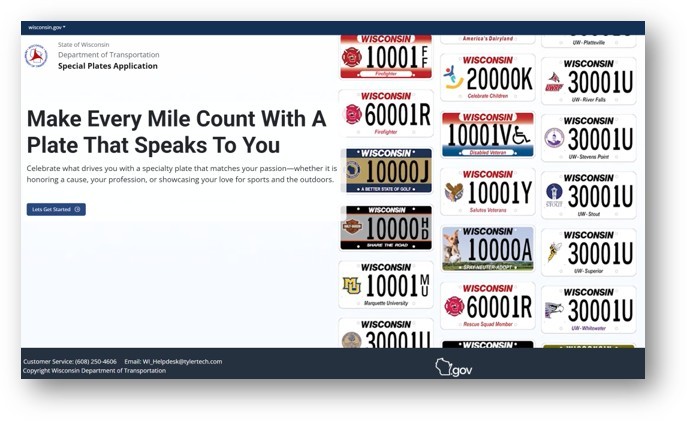
Wisconsin DMV launched its new Special Plates Web Application in February 2025 to make applying for stylized and personalized license plates faster, easier, and more convenient. More than 10% of Wisconsin vehicles have special or personalized plates, making an efficient application process especially valuable. The new web app eliminated multiple manual steps by allowing customers to submit applications electronically, sending requests directly into DMV’s imaging system without printing, mailing, scanning, or staff intervention.
The application also significantly improved the customer experience. Customers can browse more than 60 plate options organized by interests, view fees and sponsor information, personalize their plates, and preview their selections in real time. The system simultaneously checks personalized messages for duplicates or inappropriate phrases and allows customers to renew their vehicle registration and make secure online payments during the same transaction.
The new process has also dramatically reduced processing times. Customers whose orders do not require special eligibility review or personalized messages can receive their plates within a few days rather than several weeks, with approximately 25% of plates ordered through the application mailed the following day.
The results have been substantial. Since its February 2025 launch, Wisconsin DMV has processed nearly 33,000 applications through the web application. During FY25, special plate vehicles increased 5.5%, compared with a 2.4% increase in the overall Wisconsin vehicle fleet, raising the share of special plates from 10.44% to 10.78%.
The Special Plates Web Application successfully achieved its two primary objectives: integrating the online application with existing DMV processing systems to create a faster, more efficient process and providing customers with a more convenient, modern digital experience.
Region 4
Nevada Department of Motor Vehicles
Scheduling Drive Tests on Waitwell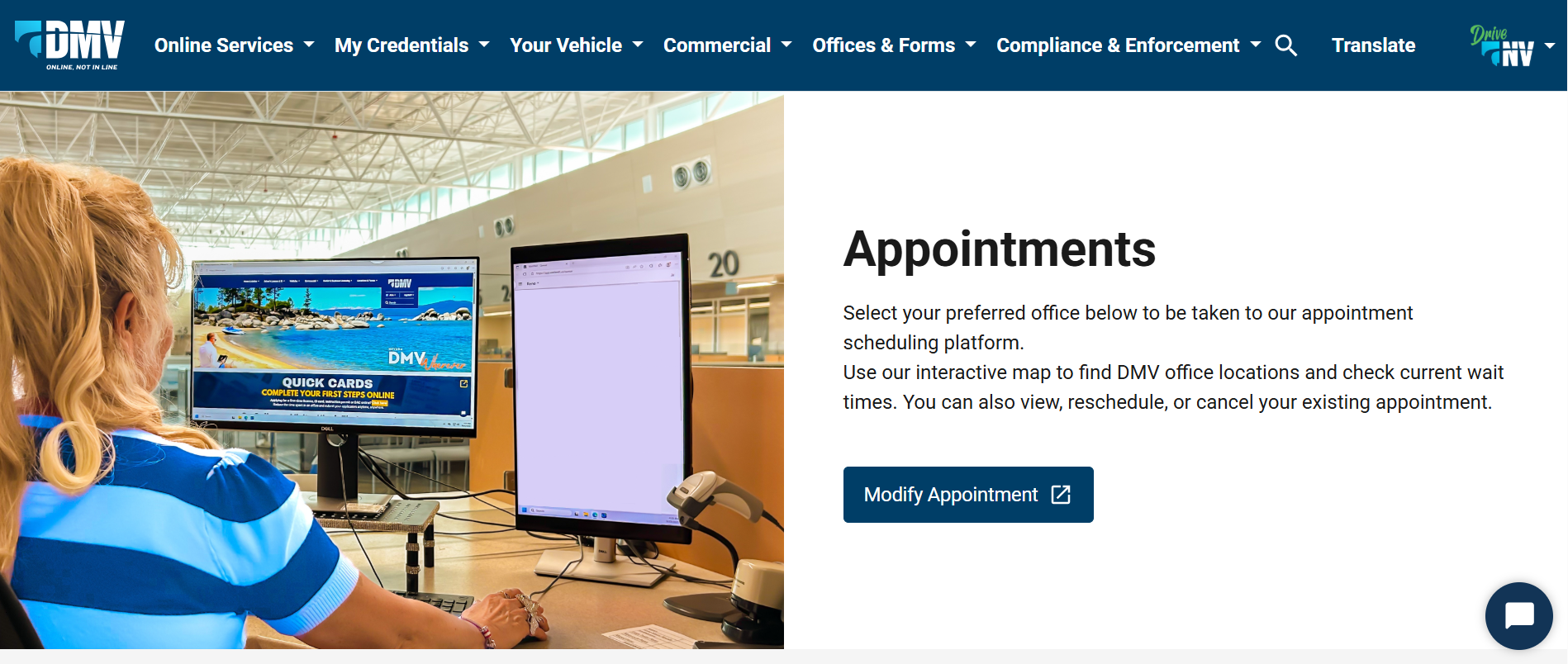
In August 2025, the Nevada DMV replaced its outdated, homegrown drive test scheduling system with the WaitWell Drive Test Scheduler. The legacy system lacked flexibility, offered no self-service options, and required extensive manual processes for appointment management and reporting. The new system transformed scheduling into a more automated, transparent, and customer-focused process.
With WaitWell, customers can independently reschedule or cancel appointments, reducing staff workload and giving customers greater control over their testing experience. Automated text and email confirmations and reminders have also improved communication, increased attendance, and helped reduce no-shows.
The system provides DMV staff with real-time operational insights through a centralized view of drive test durations, customer wait times, appointment activity, and communication history. Staff can access customizable dashboards and reports, filter information by location, date range, and appointment type, export data for analysis, and monitor key performance indicators such as no-show rates, appointment volumes, and average wait times.
Since implementation in September 2025, the DMV’s no-show rate has decreased by approximately six percent, while the average number of days customers wait for an available appointment has been reduced by several days. The improved communication and self-service capabilities have also eliminated many of the frustrations previously experienced by both customers and staff.
WaitWell has fundamentally improved Nevada DMV’s drive test scheduling and reporting capabilities. What was once a manual, rigid, and opaque process is now automated, transparent, and data-driven, empowering customers and staff while supporting better resource allocation, greater efficiency, and an improved DMV experience statewide.